


- What is short term respite and how does it support carers?Short term respite provides temporary care and support for people with disability while their usual carers take a planned break. It helps carers manage their own wellbeing while ensuring participants continue receiving appropriate support.
- How can short term respite create a more sustainable care routine?Short term respite helps balance caregiving responsibilities by providing additional support when needed. It allows carers to rest, manage personal commitments and continue providing long-term support without becoming overwhelmed.
- Who can access short term respite support?Short term respite may be available for eligible NDIS participants who require temporary assistance. Access depends on individual circumstances, support needs and the funding available in their NDIS plan.
- What types of support are available during short term respite?Support during short term respite may include assistance with daily activities, personal care, social participation, community access and maintaining everyday routines. Services are generally tailored to the participant’s individual needs and preferences.
- How does short term respite benefit people with disability?Short term respite can provide opportunities for participants to experience new environments, build confidence, develop independence and continue engaging in meaningful activities with appropriate support.
- Can short term respite help reduce caregiver stress?Yes. By sharing care responsibilities with trained support workers, short term respite can give carers time to rest, attend appointments, maintain relationships and focus on their own wellbeing.
- How often can a person access short term respite?The frequency of short term respite depends on the participant’s needs, goals, circumstances and available NDIS funding. Families can discuss suitable arrangements with their support provider.
- How can families prepare for short term respite?Families can prepare by discussing the participant’s routines, preferences, communication needs and support requirements with the provider. Planning familiar activities and sharing important information can help create a comfortable experience.
- Is short term respite only for emergency situations?No. Short term respite can be planned in advance as part of a sustainable care routine. Regular planned breaks may help carers maintain balance and ensure ongoing support for participants.
- How do I choose the right short term respite provider?When choosing a provider, consider their experience, approach to personalised care, communication, staff qualifications and ability to support the participant’s goals, preferences and daily routines.
Caring for a person with disability can be rewarding, but ongoing responsibilities can also become physically and emotionally demanding for families and informal carers. Managing appointments, personal care, household routines and community activities can leave carers with limited time to rest and recharge.
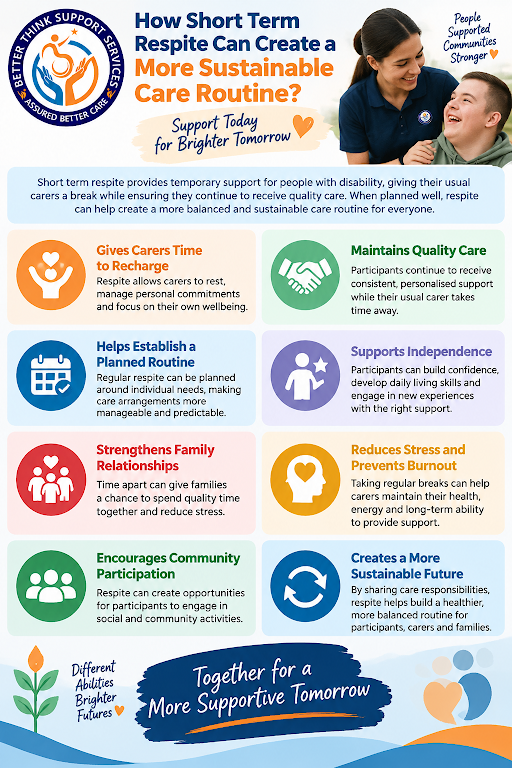
Short term respite can provide temporary support that gives carers a break while helping participants maintain their routines and independence. When planned around individual needs, respite can become an important part of a sustainable care arrangement.
What Is Short Term Respite?
Short term respite provides temporary care and support for a person with disability while their usual carer takes time away from their regular responsibilities. Depending on individual circumstances and available support, respite may involve assistance with daily activities, social participation, personal routines and other agreed support needs. Rather than being viewed only as an occasional break, respite can form part of a broader care routine that benefits both participants and their families.
Helping Carers Take Regular Breaks
One of the main advantages of respite is the opportunity for carers to step away from their responsibilities for a period of time. Regular breaks can allow carers to attend appointments, manage personal commitments, spend time with family or simply rest.
For families exploring NDIS short term respite in Adelaide, planned support can provide greater flexibility when balancing caregiving with work, household responsibilities and personal wellbeing.
Taking a break does not mean a carer is stepping away from their loved one’s life. Instead, it can help create a healthier balance between providing support and maintaining the carer’s own needs.
Supporting Participants While Carers Recharge
A sustainable care routine should also consider the participant’s experience. Quality respite support can be tailored to individual preferences, routines, abilities and goals. Participants may continue engaging in familiar activities, practising daily living skills or taking part in social and community activities while receiving appropriate support. Maintaining familiar routines can help create a more comfortable experience during periods when their usual carer is unavailable.
Families considering NDIS respite care in Adelaide can discuss the participant’s needs with a suitable provider to understand what type of temporary support may be appropriate.
Creating a Planned Care Routine
Respite can be more effective when it is planned rather than considered only when a carer becomes overwhelmed. Families can identify periods when additional support may be useful and develop a routine around those needs. Planning may also help participants become familiar with support workers and activities, potentially making future respite periods easier to manage.
For families seeking NDIS respite care in Paradise, personalised planning can help ensure temporary support aligns with the participant’s daily routines, preferences and broader support requirements.
Supporting Long-Term Wellbeing
A sustainable care arrangement recognises that both participants and carers have ongoing needs. Regular opportunities for rest can help carers maintain their own routines and relationships, while participants can benefit from continued support and opportunities to develop independence.
The appropriate frequency and type of respite will vary between individuals. Families should consider their circumstances and discuss available support options with an experienced provider.
Short term respite can help families create a more balanced and sustainable approach to caregiving. By providing temporary support, encouraging participant independence and giving carers time to recharge, respite can become a valuable part of an ongoing care routine.
Explore Short Term Respite Support
If you or your family are considering additional support, Better Think Support Services can help you explore personalised respite options based on individual needs and routines. Contact Better Think Support Services today to discuss your support requirements.
Call us at 0401541151/ 0468 850 255 or email us at info@betterthinksupport.com.au for more information.